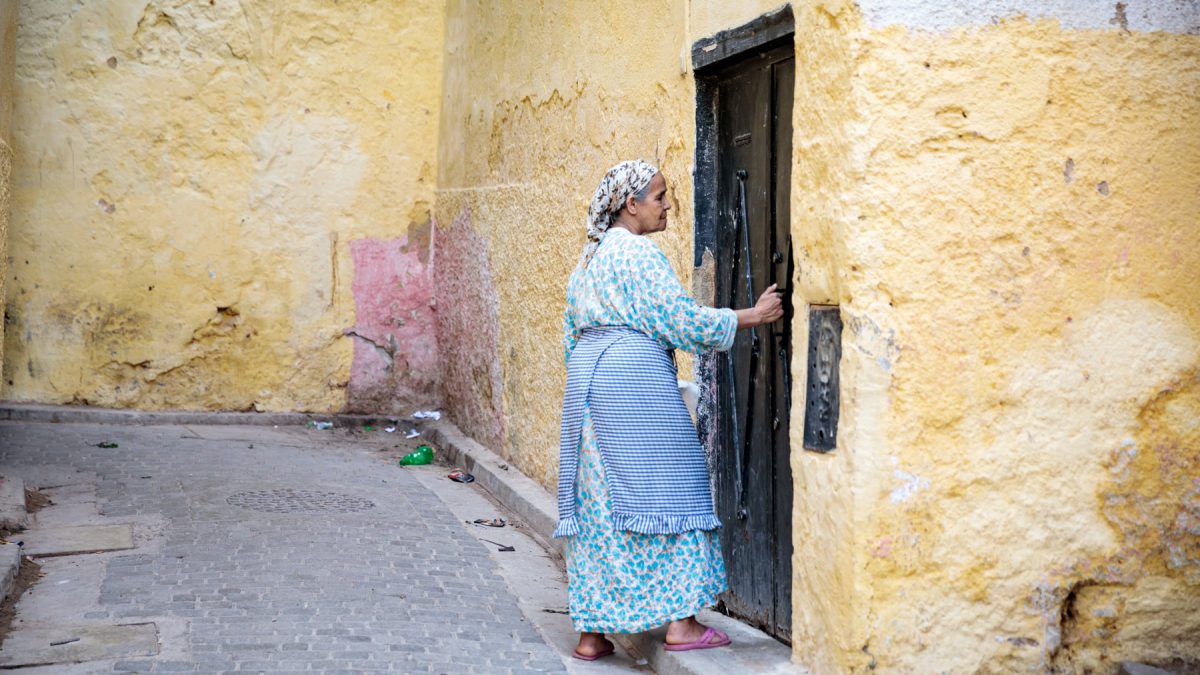
The city of Fez captivated me. I couldn’t resist capturing its beauty through my camera. I had to explore more.


Moroccan mosaic and tiles

Chouara Tanner
December 27, 2018
Magical Fez
December 30, 2018Moroccan tiles
Fez, Morocco
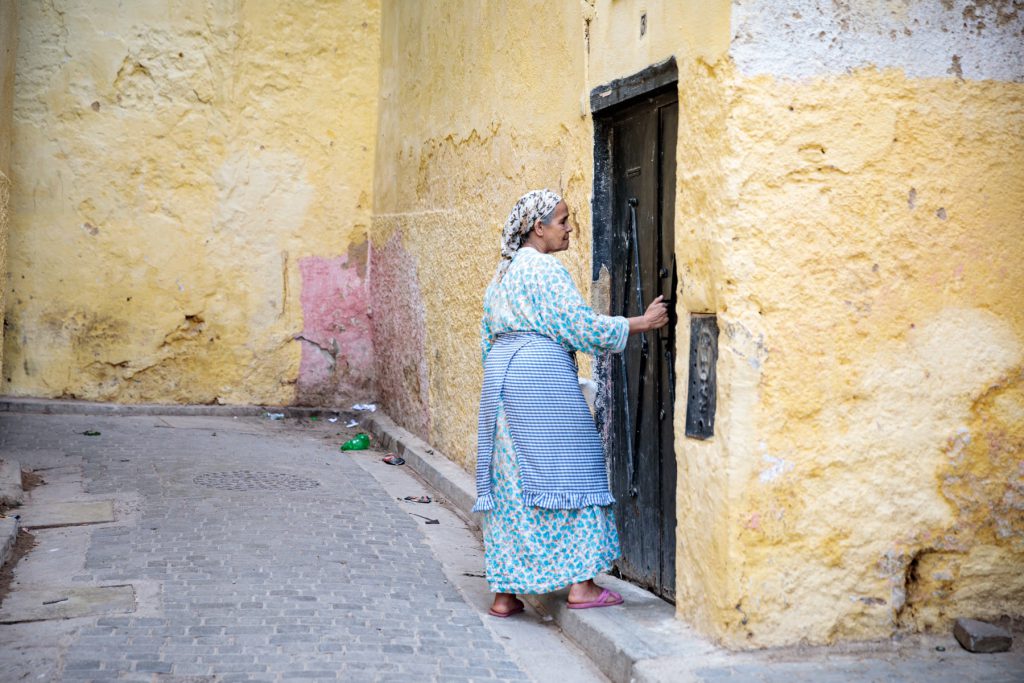
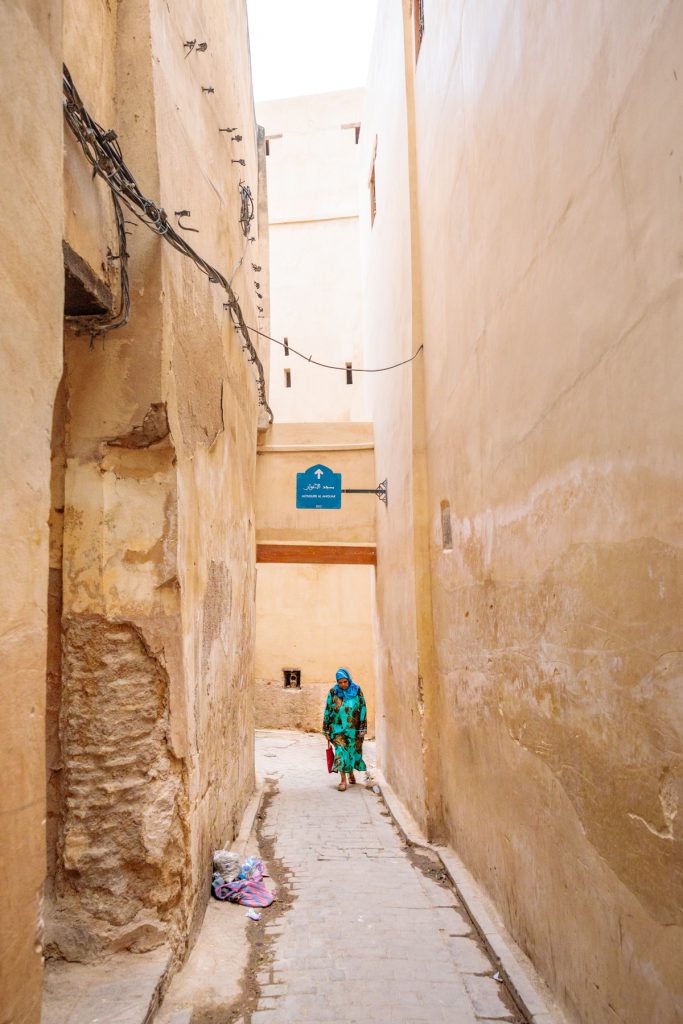
The narrow streets, bustling with energy, left me in awe. Everywhere I looked, the lively activity captivated me, making it impossible to look away.
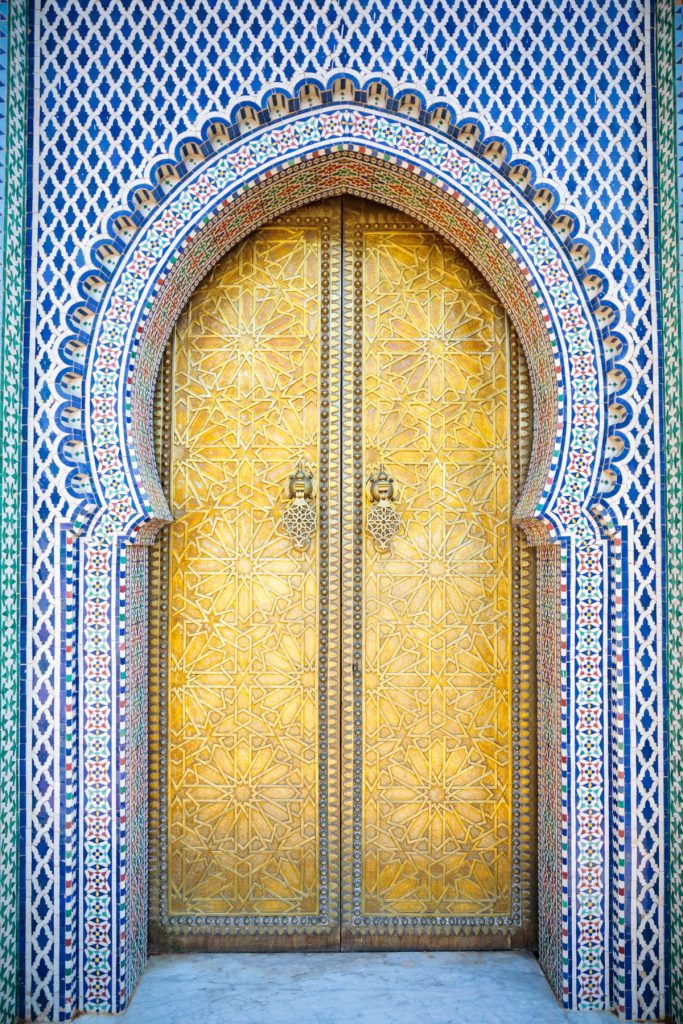
The Royal Palace of Fez (Dar el Makhzen) is a captivating sight! While its doors remain closed, they protect breathtaking gardens, intricate mosaics, beautiful mosques, exquisite painted ceilings, and a rich madrasa, all inviting us to imagine the beauty hidden within. What a treasure this place is!
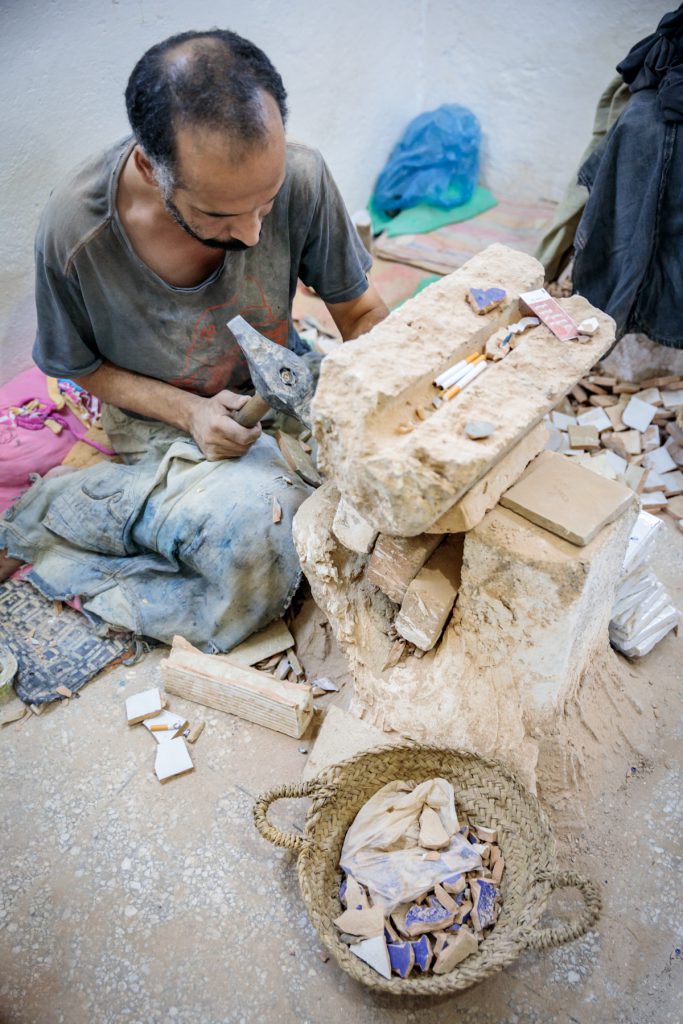
I originally planned to stop at one of the markets, but as a passionate mosaic enthusiast, I couldn’t resist the chance to witness the craftsmanship in person.
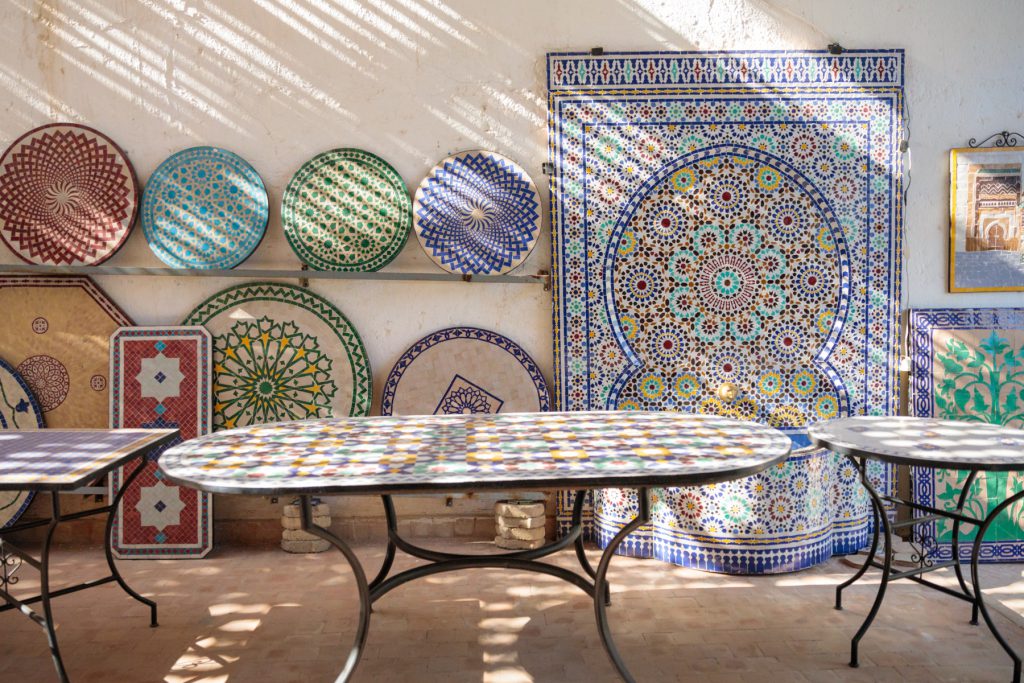
Are you eager to discover the fascinating world of Moroccan tiles and pottery? Allow me to share what I have learned about their distinctive designs and vibrant heritage!
The Fez region has some of the highest quality clay in Morocco, making it an essential resource for artisans and builders alike.
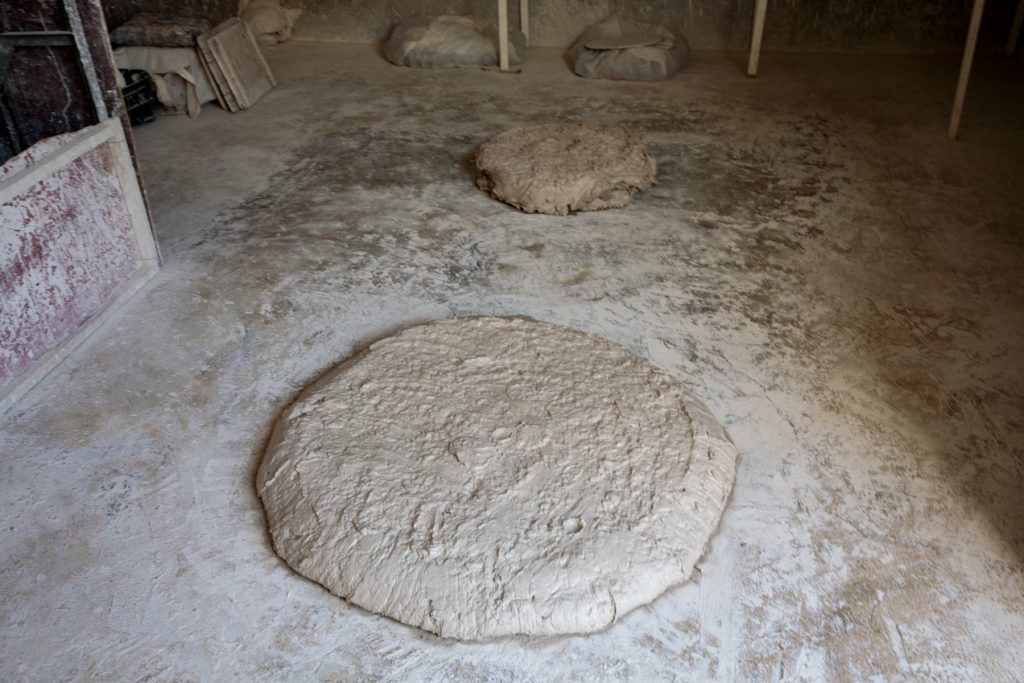
Finding high-quality clay is crucial for creating a top-quality product, such as tiles.
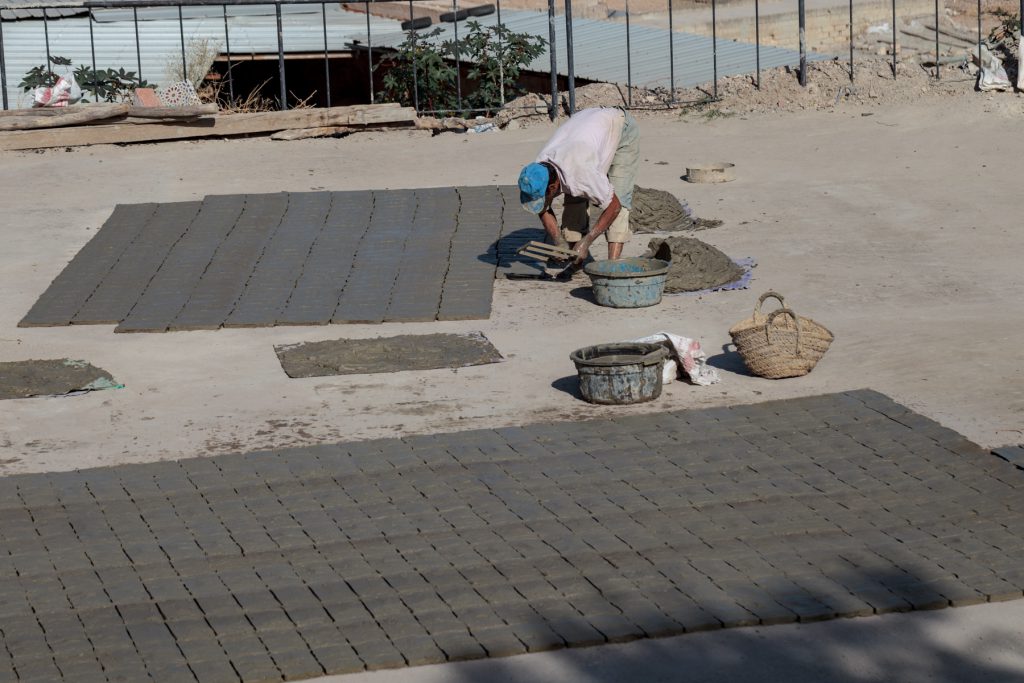
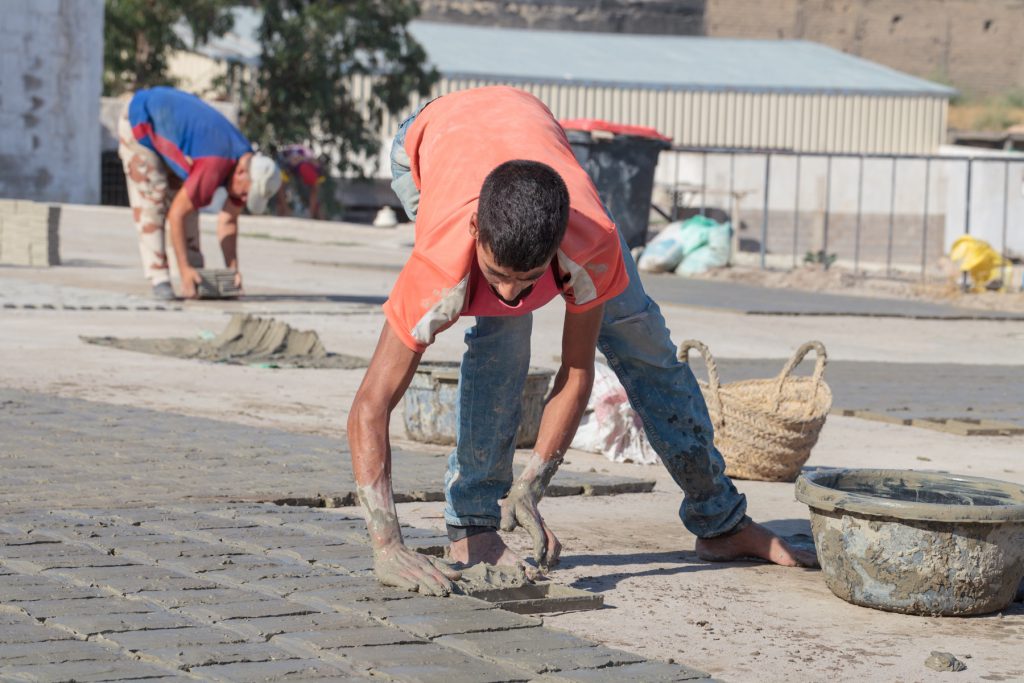
After filtering the clay, a skilled craftsman carefully hand-flattens it into a precise square shape. This essential step guarantees that the clay reaches optimal density, removing any air bubbles that could weaken its quality.
The tiles are now arranged in the traditional wood-fired kilns. In classic Moroccan kilns, heat circulates unevenly, giving each tile a slightly different shade of colour.
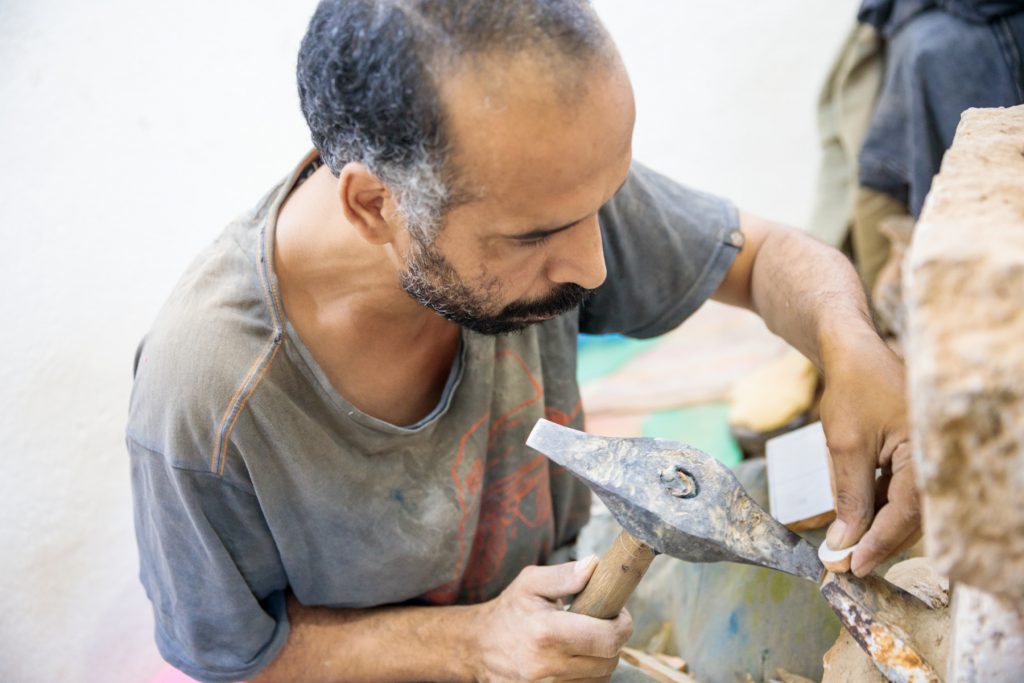
The second craftsman roughly cuts and shapes the tiles using a sharp tool that resembles a cross between an axe and a hammer. This medieval tool is called a “menkach” and is hand-sharpened on a natural rock.
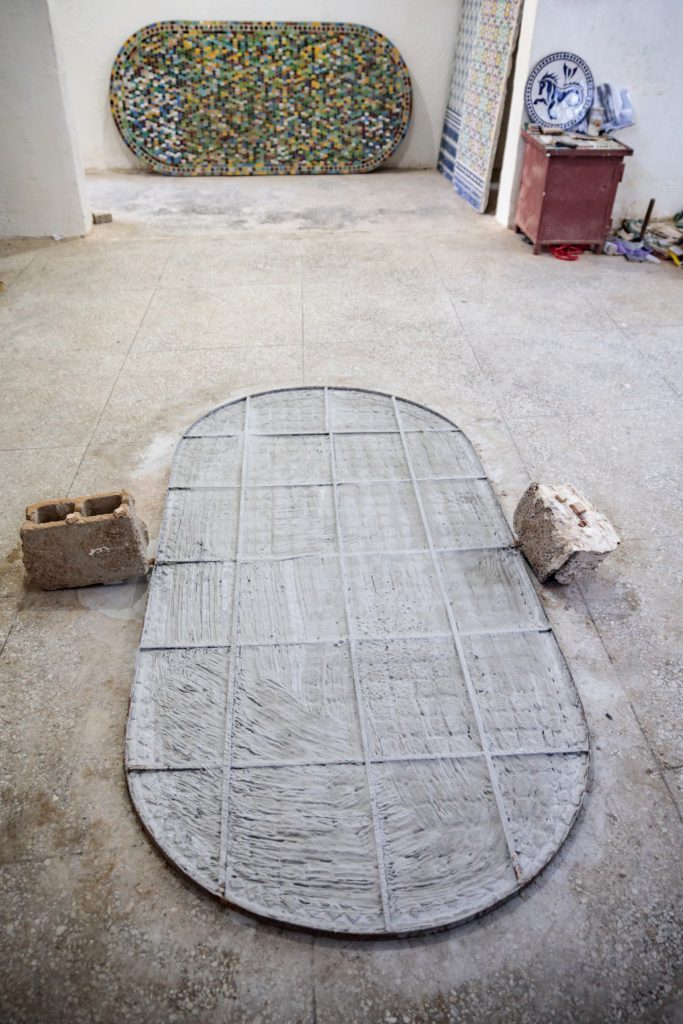
Using a premium three-component ISO-certified glue guarantees a strong bond for your tiles! Once you allow 24 hours for the glue to fully dry, you’ll be eager to install your tiles—creating a stunning and durable space you can enjoy for years to come. Happy tiling!
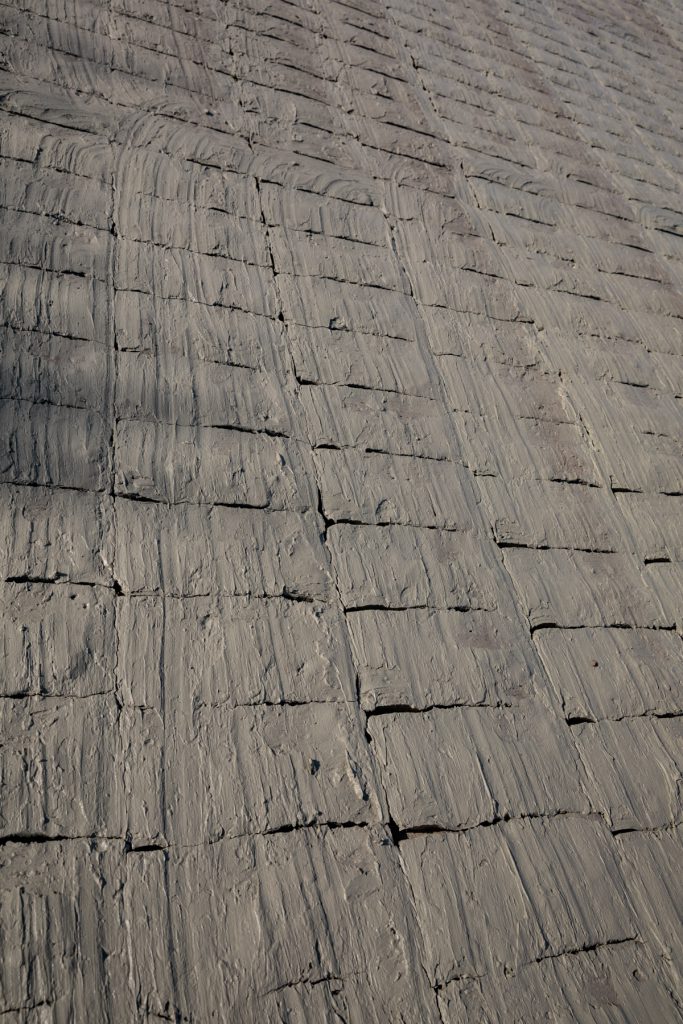
To attain the ideal texture, soak the clay in water until it becomes pliable. Once it reaches this perfect softness, take the time to filter it by hand for the best results.
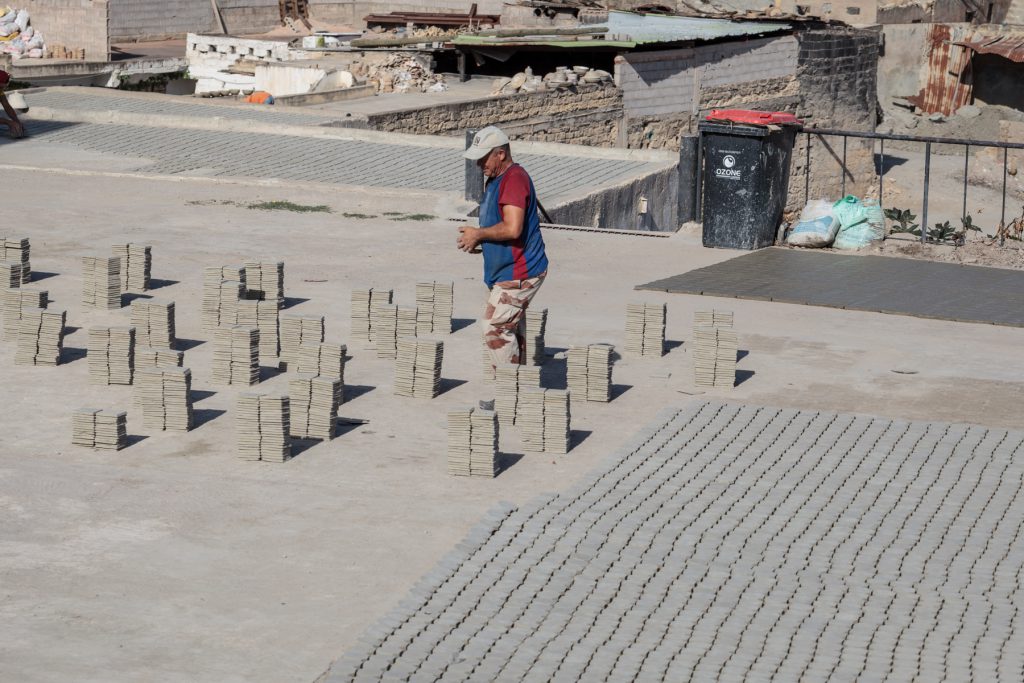
Clay is stored in a cool, dry place after being shaped, moulded, and flattened to prepare for the first bake.
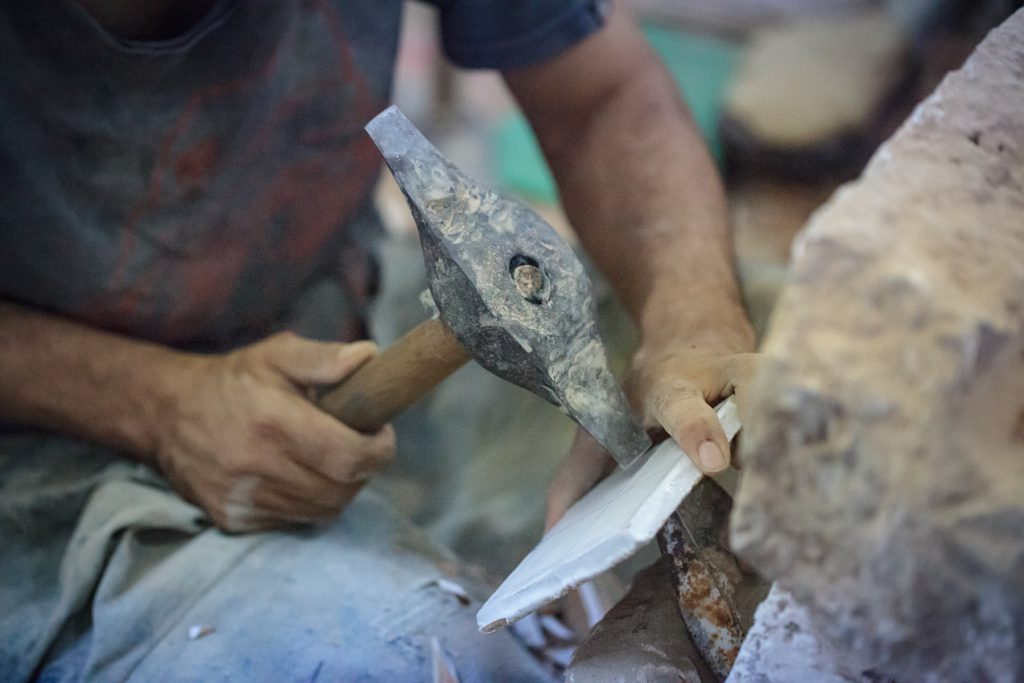
A master craftsman excels in the art of precision cutting, skillfully removing excess clay to produce flawless works of art.
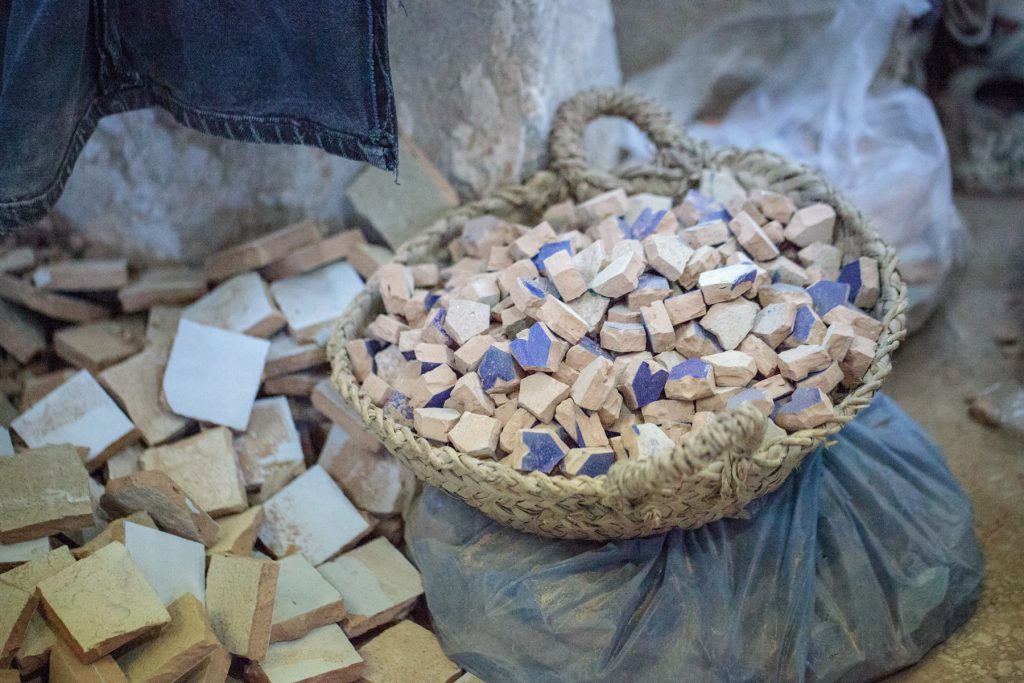
The final outcome is a range of differently shaped pieces that will be assembled to form the zellige patterns.
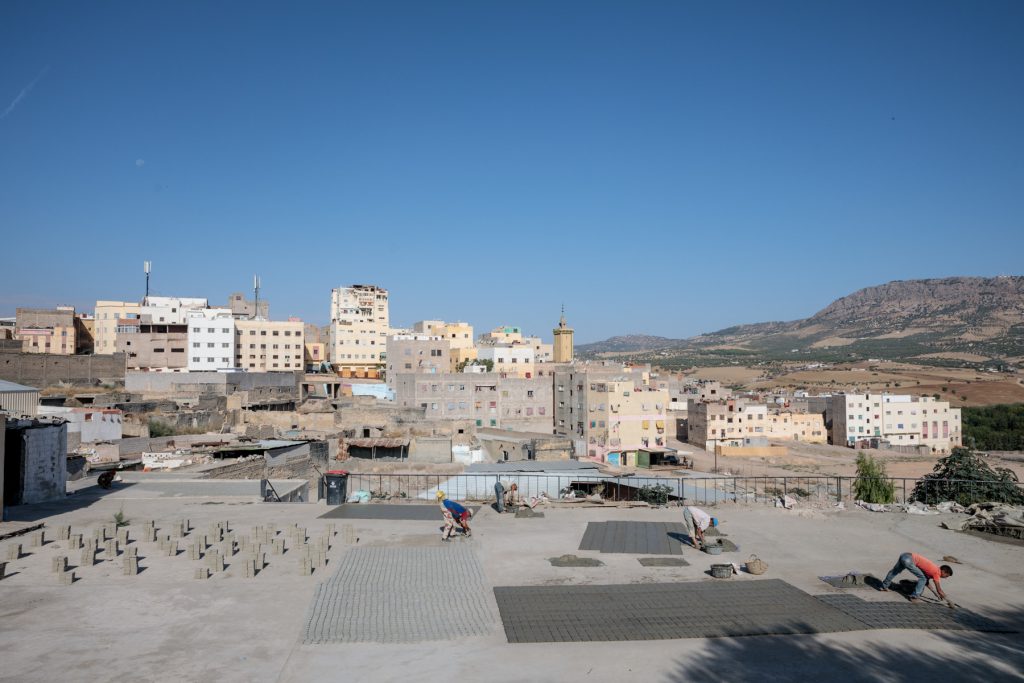
To optimise quality and efficiency, tile production is most suitably carried out in summer, early autumn, and spring. Adopting this seasonal strategy guarantees better outcomes and punctual deliveries.
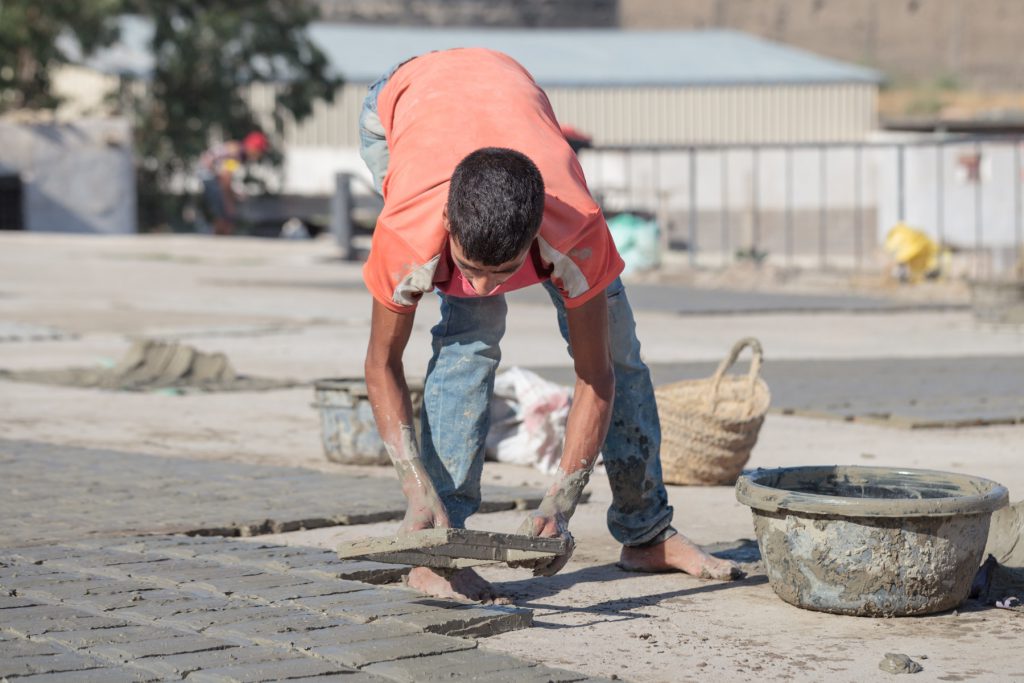
The square raw clay tiles are carefully sun-dried, utilizing a completely natural process that enhances their quality and durability.
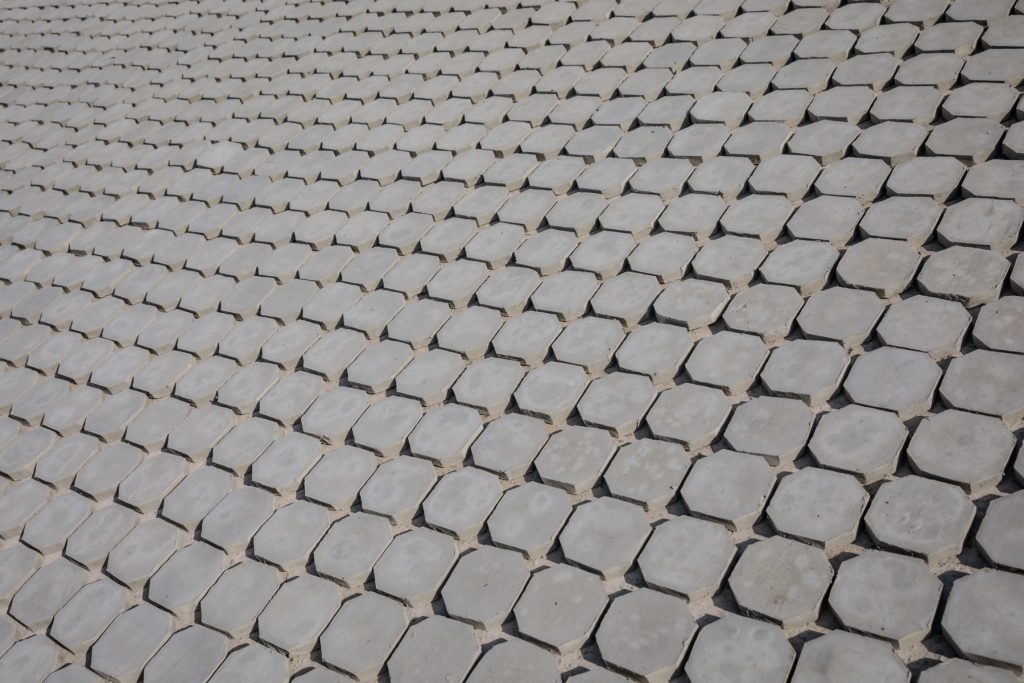
Once the tiles are completely dry, a skilled craftsman carefully applies colour to their upper surfaces, ensuring a striking finish.
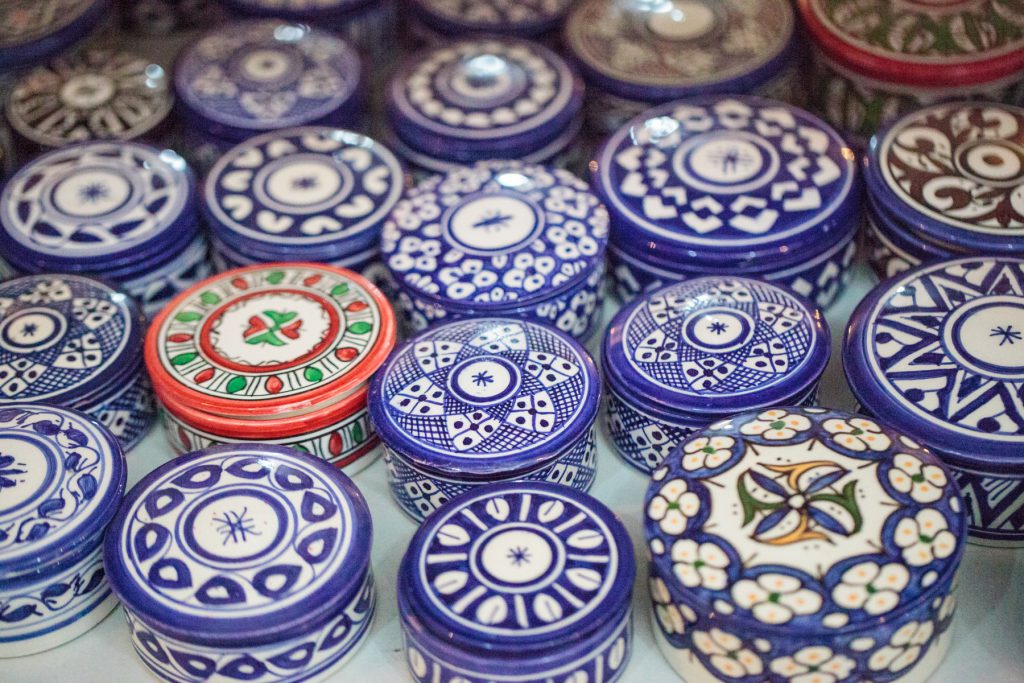
You ought to explore Moroccan pottery. It’s genuinely remarkable.
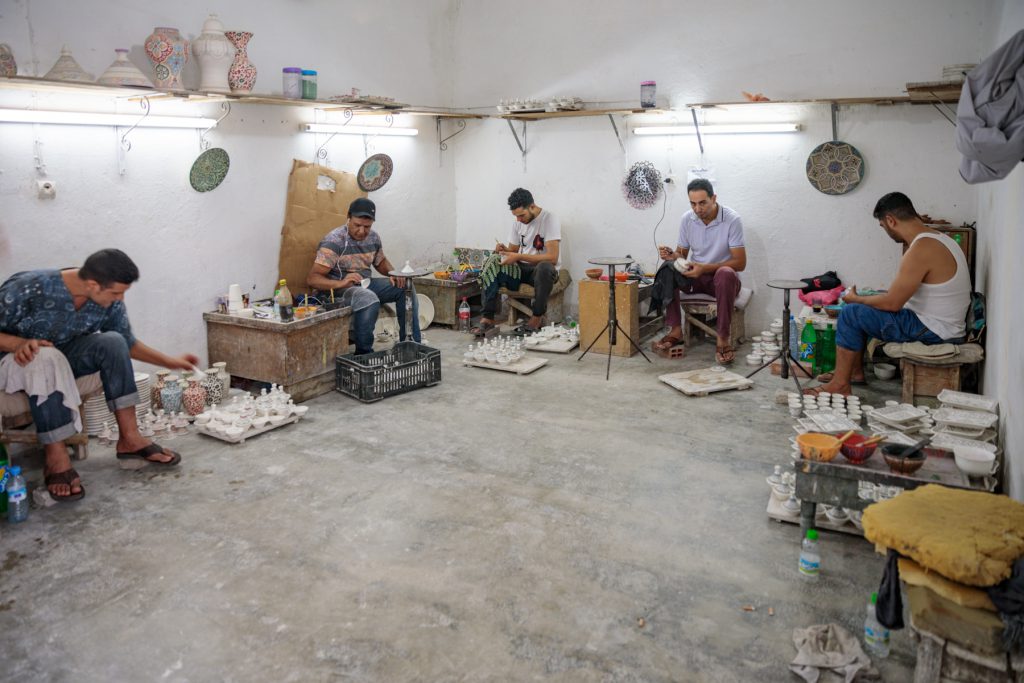
Artisans’ groups uphold centuries-old traditions in their designs, passed down through families.
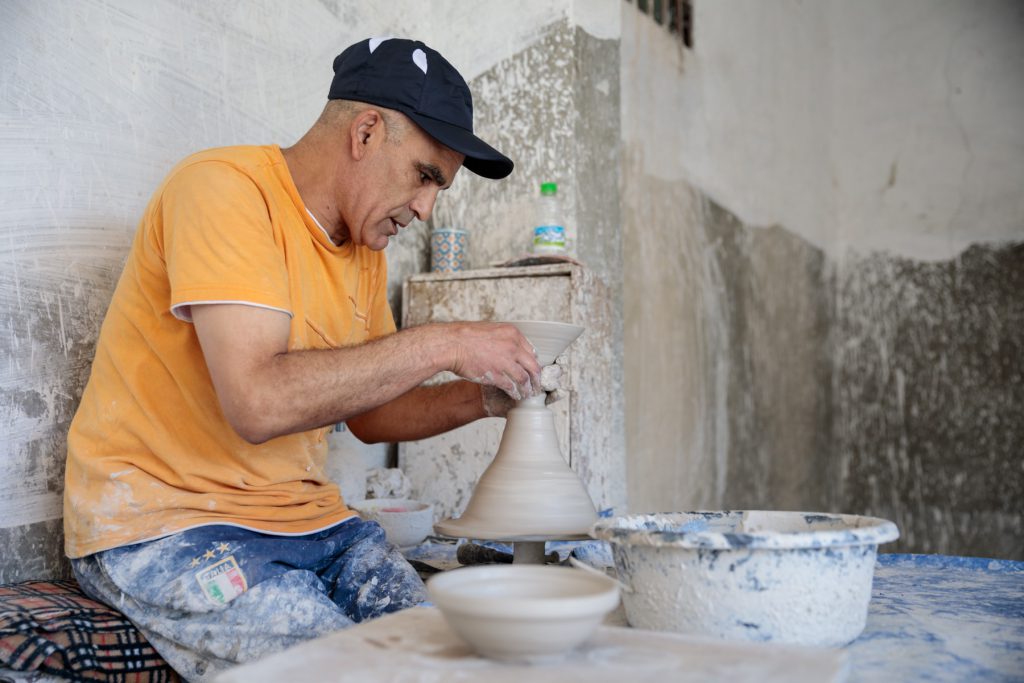
For those passionate about craftsmanship, Safi is a must-visit destination, celebrated as the heart of Moroccan pottery.
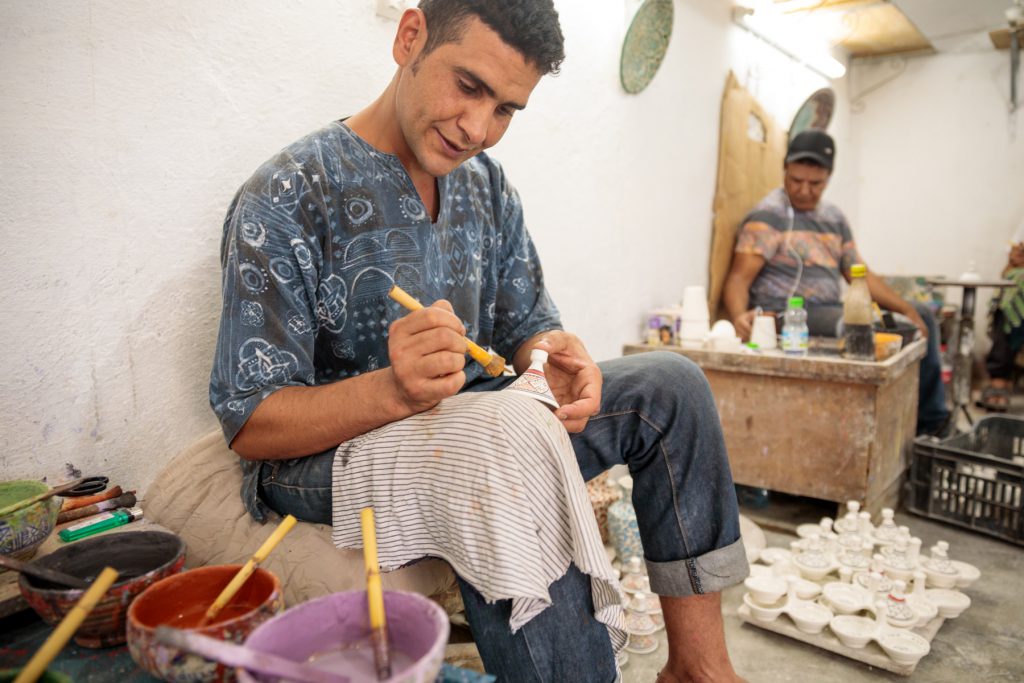
Moroccan pottery design is deeply influenced by the rich traditions of Islamic and Berber art, producing unique and culturally meaningful pieces that showcase a vibrant heritage.
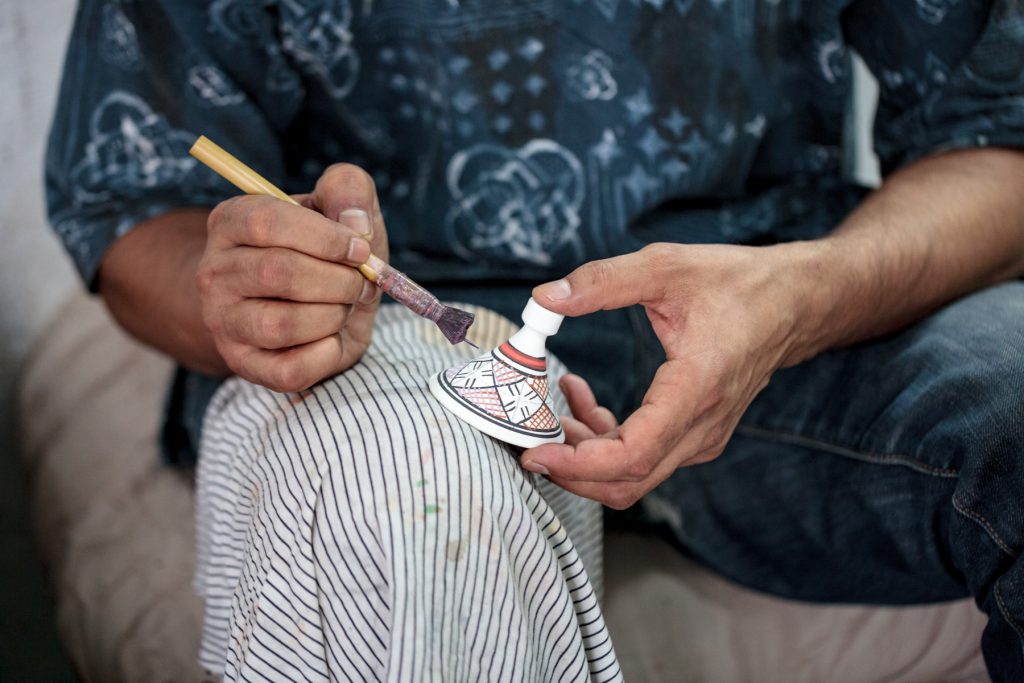
Pottery is often beautifully decorated with intricate geometric and arabesque patterns, creating stunning visual displays that are hard to ignore.
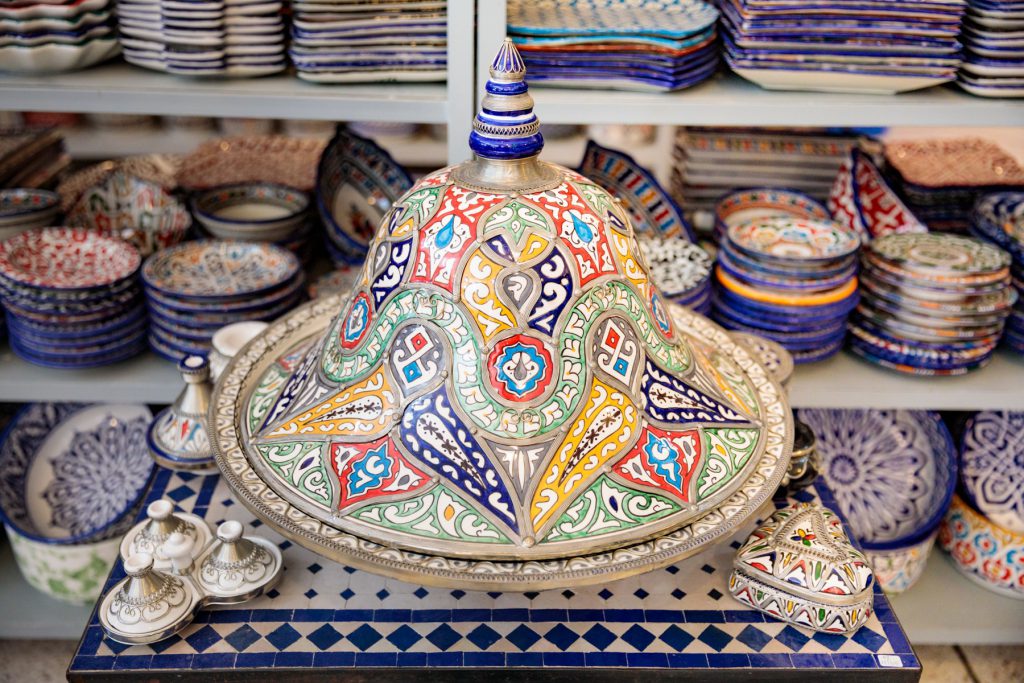
A tajine pot or tagine for a Maghrebi dish. However, the one in the image is meant solely for decoration.